12 Legitimate Ways to Use AI to Make Money Online in 2026
If you are 18–25, love tech, and keep seeing people flex “AI income” on Instagram or YouTube, you are probably wondering which parts are real and which parts are hype. By the end of this guide, you will know exactly 12 legit ways to use AI to make money online in 2026, what they actually pay, and how to start with almost no experience.
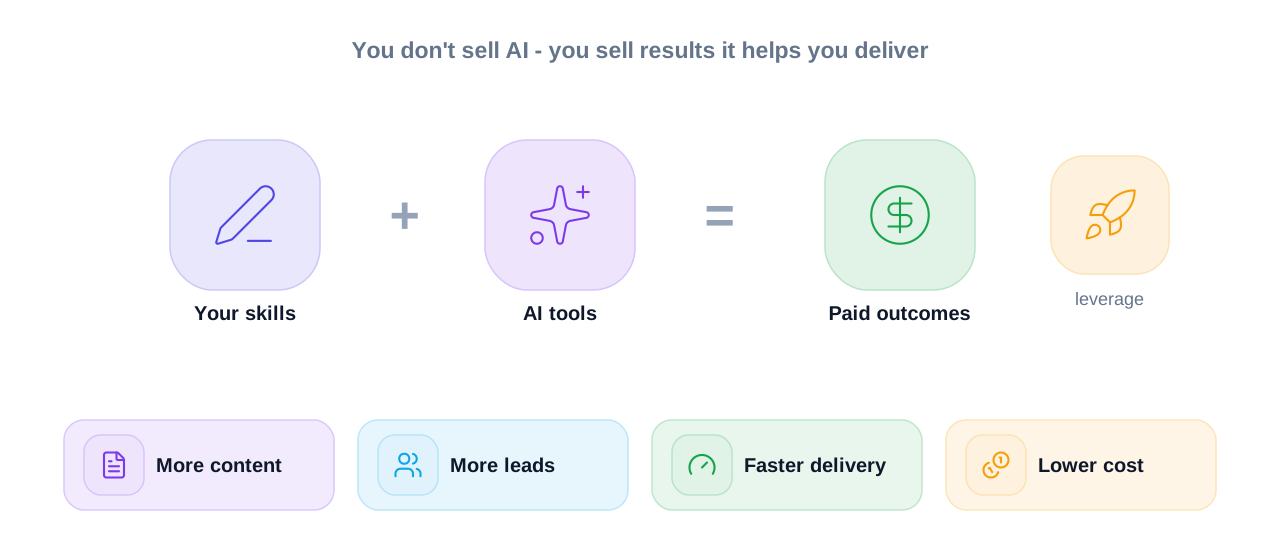
The confusing part is simple: AI looks like it can do everything, so you don’t know where you fit in. Are clients even willing to pay you when they can pay for a tool instead? In this article, we focus on the angle that actually works in 2026: you don’t sell “AI,” you sell specific results that AI helps you deliver faster and cheaper.
Our site exists for students and young professionals who want practical AI, tech, and productivity guides not theory, but workflows you can copy today. You will see real examples, common earning ranges based on public data, and realistic timelines, especially for readers in the US and Canada.
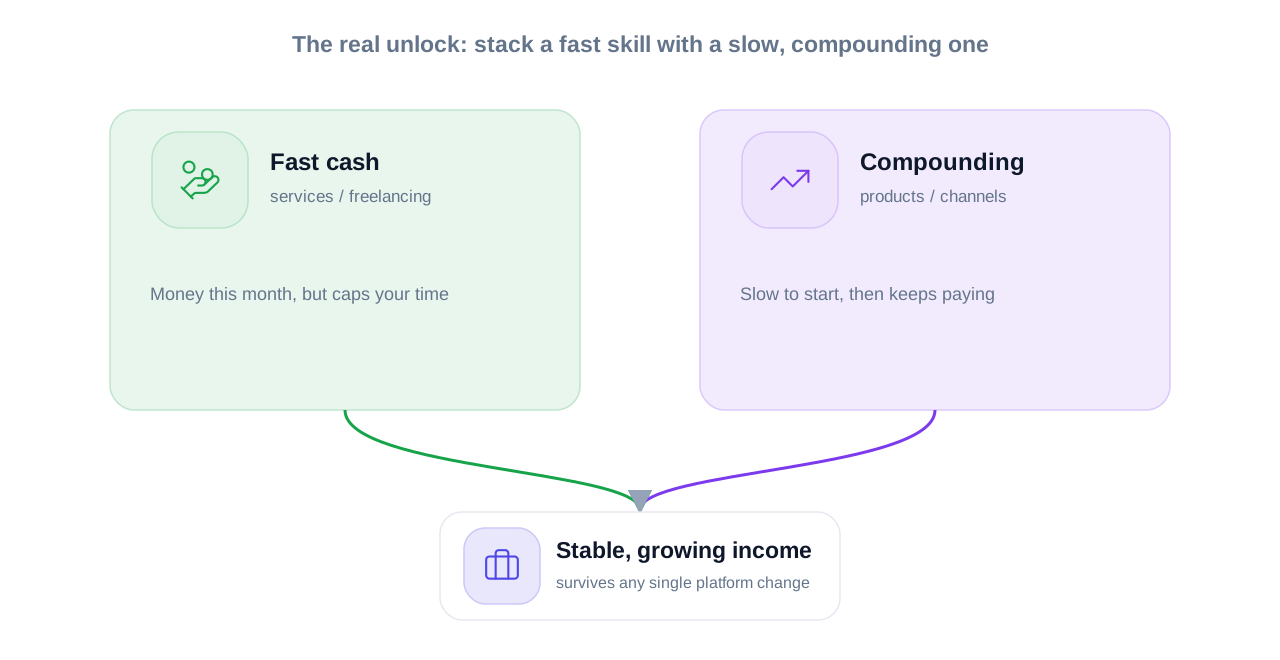
Along the way, I will show you one thing most “AI money” videos skip: how to stack a fast cash-flow skill with a slower, compounding income stream so you are not stuck doing low-paid gigs forever. That alone is what separates people who actually replace a part-time job with AI tools from those who burn out after two weeks.
What Using AI to Make Money Online Really Means And Why It Matters in 2026
Using AI to make money online is not about pressing a magic “generate” button and watching dollars appear. It means combining AI tools with your basic skills writing, editing, design, research, communication — to create digital work that businesses or audiences are already paying for. In practice, AI becomes your “super power,” cutting the boring part of the work so you can take on more projects or offer better results.
It matters right now because the money is shifting, not disappearing. A PwC report estimates AI could add up to around $15.7 trillion to the global economy by 2030, which is already reshaping freelance work and online income in 2026. For students, that means two things: some entry-level tasks are vanishing, but entirely new micro‑jobs and service offers are opening up for people who understand how to operate AI tools, not build them.
Most people I talk to underestimate how much “boring” digital work still has to be done by humans: setting up systems, understanding client context, fixing AI’s mistakes, and packaging everything into something usable. AI content agencies, AI video editors, and automation consultants are getting retainers because they own the outcome, not the tool.
Stick with this guide and you will see a clear pattern: quick-start services (like AI‑assisted writing or short‑form video editing) can bring you your first $200–$500, while more advanced offers (like AI automations or niche digital products) can grow toward $1,000+ per month as you build systems and proof. I will show you exactly which of the 12 ideas are good for “cash this month” and which ones are better as longer-term bets.
Who This Is For and Who Should Skip It
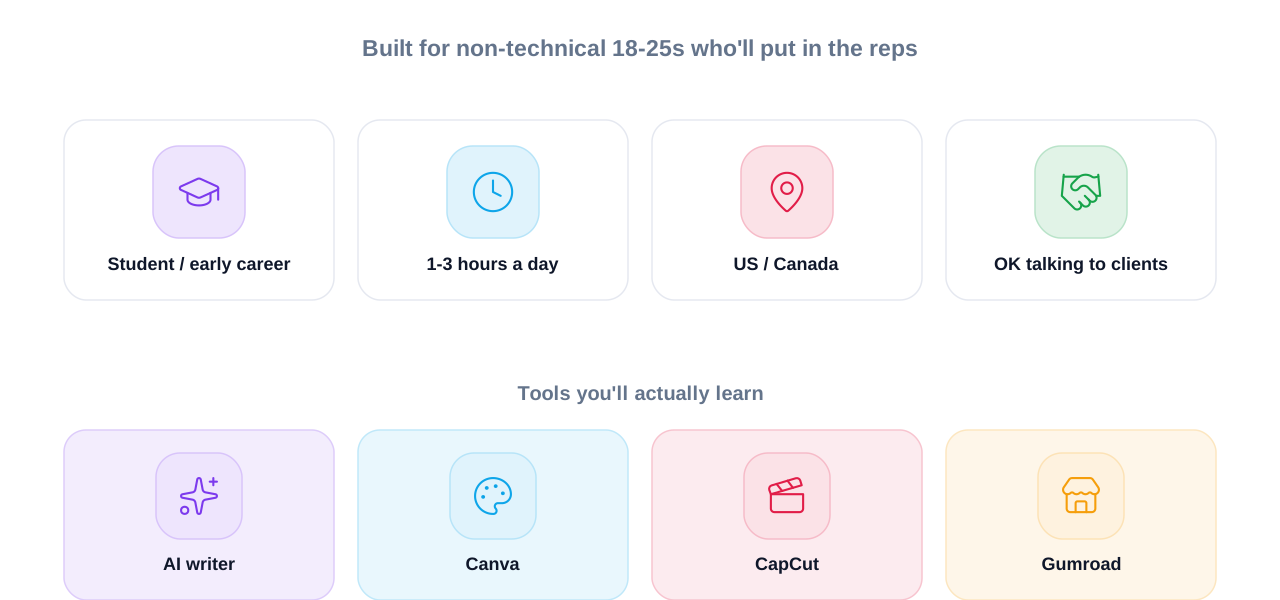
This guide is written for students and young adults who are comfortable with basic tech and want to earn from their laptop in a realistic way. If you are in college or just starting your career, especially in the US or Canada, and you are okay learning tools like ChatGPT, Canva, or CapCut, you are exactly the person I had in mind.
You’ll benefit the most if:
- You can spare 1–3 hours most days for the next 60 days. That is enough time to learn one income path deeply and land your first small client or your first digital sale.
- You enjoy experimenting online. You are willing to test different offers, tweak your portfolio, and send awkward messages to strangers on LinkedIn or Discord until something clicks.
- You are okay starting small. Many students I’ve seen go from $50 to a few hundred dollars per month within 2–3 months using AI‑assisted services, then scale only after they have proof.
You should probably skip most of this if:
- You want “passive income” next week. Online, the only people who make money instantly are platforms and tool creators. Everyone else goes through a learning curve first.
- You refuse to talk to clients or people. Almost all high‑earning AI income streams in 2026 involve some amount of communication — even if the actual work is automated.
- You are expecting a guarantee. Any specific numbers here are based on typical ranges reported in public articles or case studies, not promises.
The single most important requirement is that you must be willing to treat this like a real skill, not like a lottery ticket . When you do that, AI gives you leverage on your time that past student generations never had. If you are a curious 18–25‑year‑old who wants to turn AI tools into real, consistent online income, this article is written for you.
How It Actually Works Complete Process
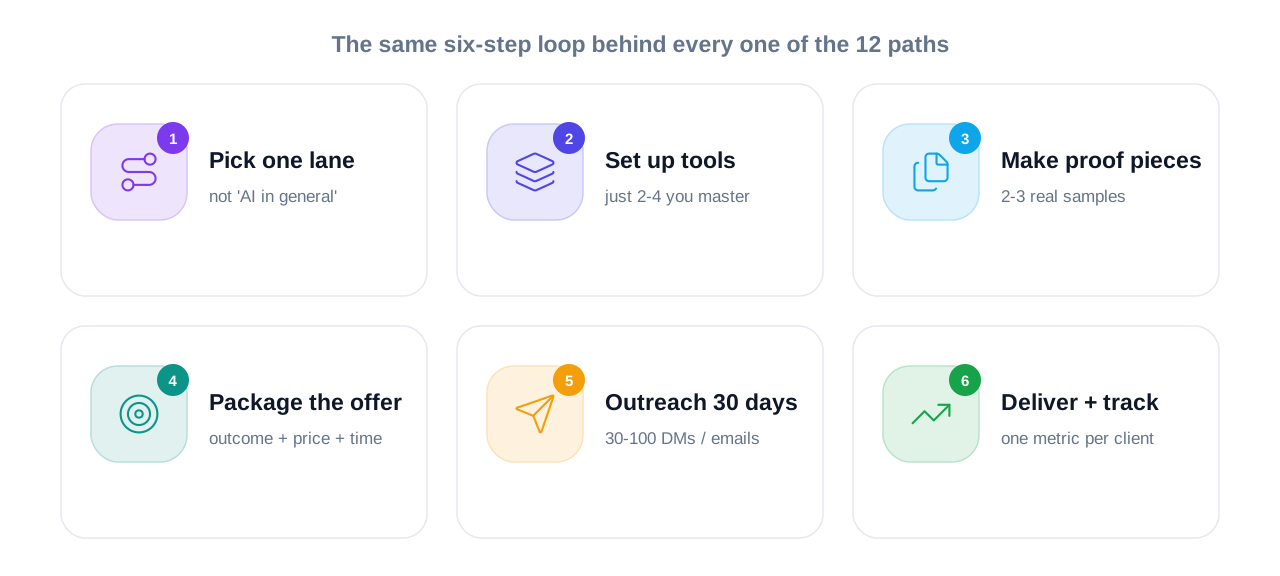
Let’s zoom out and look at the real process behind using AI to make money online, no matter which of the 12 ideas you pick. When you actually do this, you’ll find the “make money” part only happens after three unsexy stages: choosing a lane, building a tiny proof of skill, and putting offers in front of real humans.
Step 1: Choose a specific lane, not “AI in general.”
Pick one of the 12 paths that matches your current skill: for example, if you like writing, choose AI‑assisted blogging or copywriting; if you like visuals, choose AI‑assisted short‑form video editing. Go through 2-3 public guides or videos focused only on that lane so you don’t get distracted by shiny tools.
Step 2: Set up the minimum tool stack.
For most paths, you will need only 2–4 tools: usually ChatGPT or a similar AI writer, a design or video tool like Canva or CapCut, and sometimes a file‑sharing or selling platform like Gumroad. Create free or low‑cost accounts, go through each tool’s beginner tutorial, and save 2–3 workflows as templates (for example, “YouTube script → thumbnail → short video cut”).
Step 3: Create 2-3 “proof pieces” without waiting for clients.
If you aim to offer AI‑assisted content or video, produce sample work for imaginary or real small brands. For example, make three short TikTok videos for a local café, or three blog‑style articles for a niche site. The idea is simple: people don’t pay you for potential; they pay you because you show them work similar to what they already want.
Step 4: Package your offer in outcome language.
Instead of saying “I use AI tools,” describe what you help with: “I create 15 TikTok‑ready clips from your long videos every week” or “I write and optimize two SEO blog posts per week that bring you organic traffic.” Be clear on what is included, how long it takes, and what your starting price is. You can raise it later as you get results.
Step 5: Do targeted outreach for 30 days.
This is where most students quietly quit. In reality, getting the first 1–3 clients usually comes from sending 30–100 DMs or emails, not waiting for platforms to magically send you work. Focus on one or two channels: freelance marketplaces, LinkedIn, or cold email to small businesses that obviously need your help (like local restaurants with dead social media).
Step 6: Deliver, track, and improve.
Once you land a client, onboard them in a simple way: get clear input, use your AI tools to produce the work, and build a small checklist so you deliver on time every week. Track results when you can (views, clicks, leads), because that is what lets you move from one-off gigs to monthly retainers later.
The part most guides skip is capacity planning. If you accept every low‑paid gig, you fill your week with work that AI helps you complete faster, but your income still hits a ceiling. The real play is to start with simple services, then slowly transition into either higher-ticket retainers or scalable digital products once you have proof that your work produces outcomes.
Comparison Table 5 AI Income Paths Side by Side
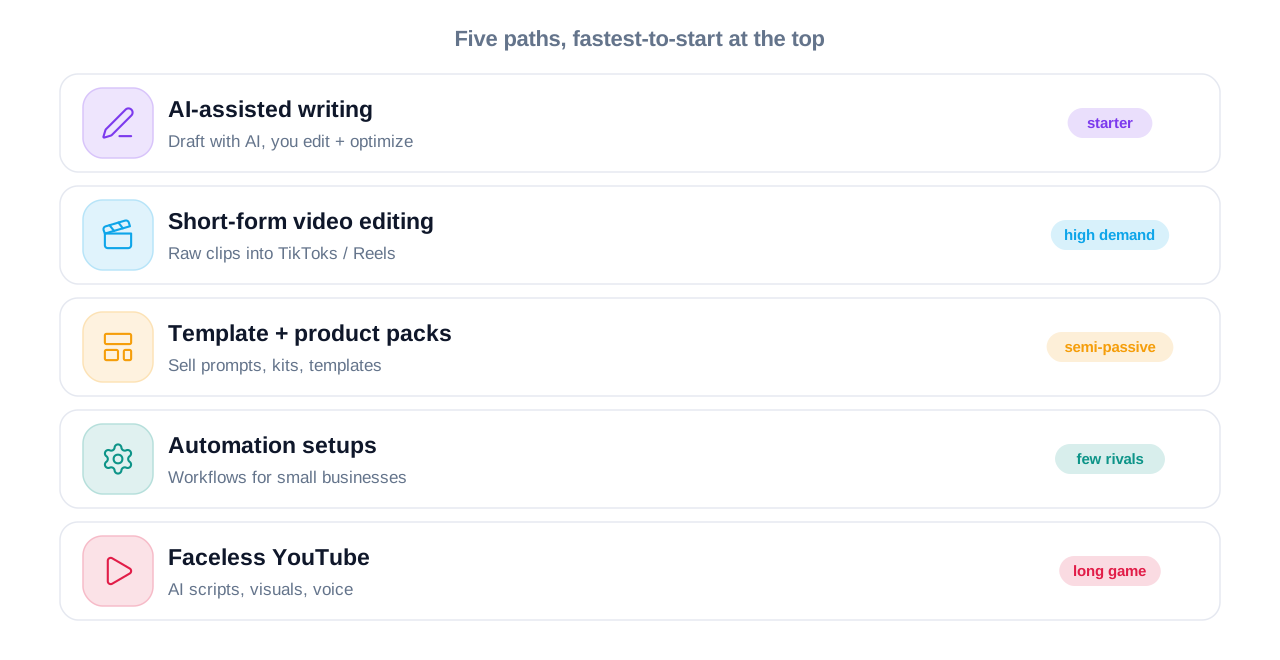
Here is a structured look at five of the 12 ways we will cover, from fastest to start to most advanced.
| Name / Option | Key Feature | Best For | Limitation | Verdict |
| AI‑assisted freelance writing | Use AI to draft, you revise and optimize | Strong writers, blog or copy fans | Highly competitive, needs editing skills to stand out | Good starter, easy to stack with other skills |
| AI short-form video editing | Turn raw clips into TikToks/Reels with AI tools | Visual thinkers, social media users | Needs basic storytelling sense, tools change fast | High demand in 2026, strong income potential |
| AI template and digital product packs | Sell templates, prompts, kits on marketplaces | Students who like systems and design | Slower to get first sale, needs audience or SEO | Great for semi‑passive income over time |
| AI automation setups for small business | Build workflows to save time (emails, forms, follow-ups) | Tech-comfortable students, no-code fans | Requires deeper tool knowledge, more responsibility | Fewer competitors, strong retainer potential |
| Faceless YouTube channel with AI | AI helps scripts, visuals, and voice for niche channels | Patient creators, niche topic lovers | Needs months to grow, platform risk (algorithm changes) | Long‑term asset if you stick with it |
For most students, a smart combo is to start with AI‑assisted writing or video editing to build cash flow, then slowly add templates or a faceless channel as your “asset” play. If you are more technical and enjoy systems, automation setups may be the fastest way to escape low‑paying gigs because fewer people are willing to touch them.
Real Benefits With Numbers and Specifics
When you do this properly, the benefits are not just “more money.” AI changes how you earn and learn at the same time. A freelancer survey showed that while some tools promise “10x productivity,” realistic gains for independent workers are in the range of 20–40% time saved per project when used well, which effectively raises your hourly income without raising your rates.
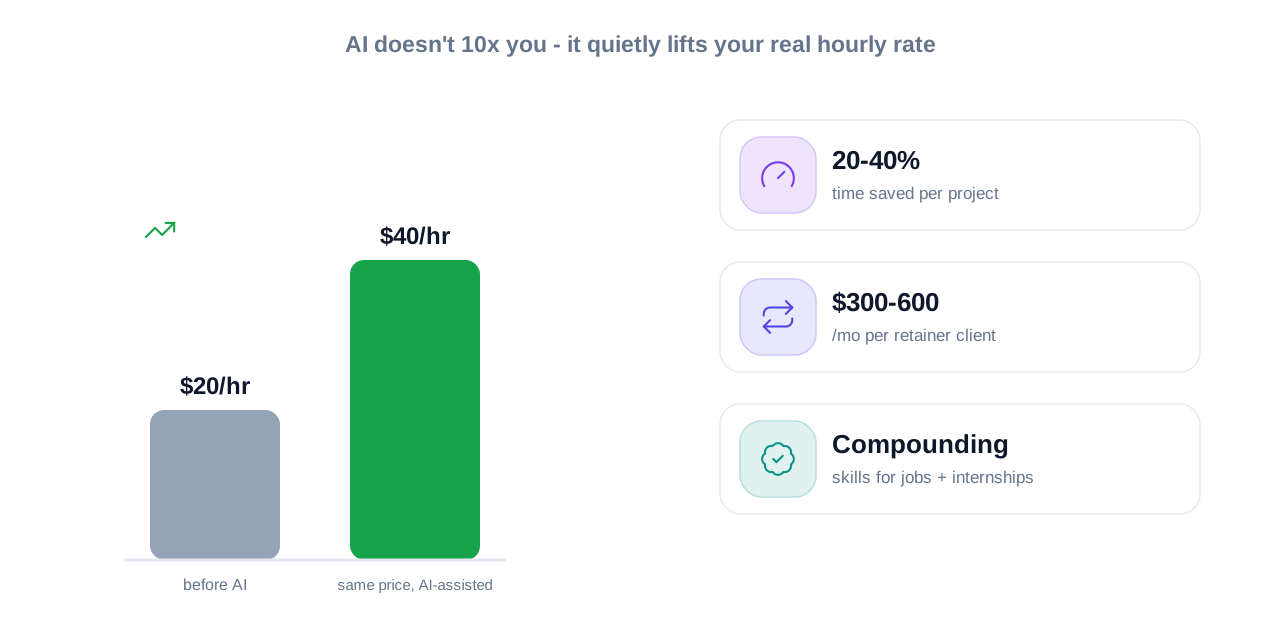
For example, say you charge $80 for a blog post that used to take you four hours. If AI drafting trims that to two hours while you maintain quality, your effective rate jumps from $20/hour to $40/hour, even if you keep the same price. Over a month of 10–15 such projects, that is the difference between “pocket money” and something that can cover your phone bill, groceries, or a chunk of your tuition.
On the video side, creators using AI tools for clipping, subtitles, and B‑roll often report going from editing one or two short videos per day to handling five or more, which makes retainer models more natural: businesses are more willing to pay $300–$600 per month for a steady flow of content that actually goes live. In practice this means fewer clients, more stable income, and less time wasted chasing new deals.
One benefit most articles skip is skill compounding. As you learn to brief AI tools correctly, structure content, and understand analytics, you quietly build a portfolio that is attractive for internships and remote jobs in marketing, operations, or product. Even if your side hustle never becomes “full‑time,” those skills often become the reason you stand out against classmates who only have grades on their CV.
Beginner Mistakes Most People Make and the Fix
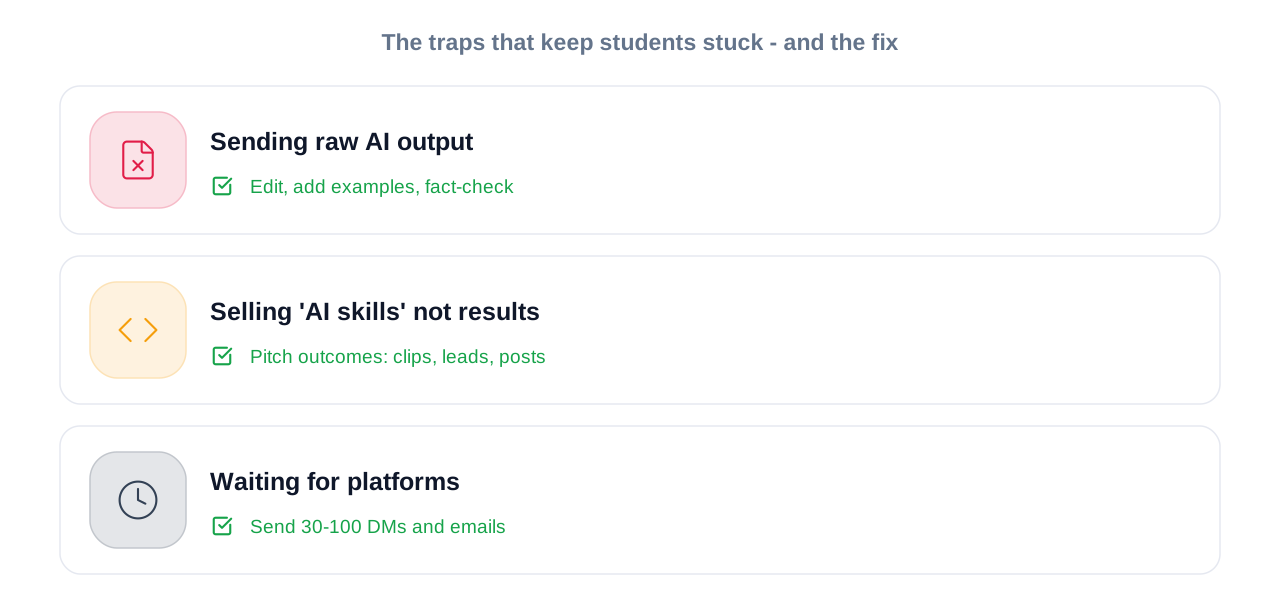
Mistake 1: Letting AI write or create everything without editing.
New students often paste a prompt into ChatGPT, copy the output, and send it to clients as‑is. Clients can smell this from a mile away because the tone feels generic and sometimes even repeats itself. The fix is simple: treat AI as a rough first draft, then spend real time editing, adding personal examples, checking facts, and matching the client’s voice.
Mistake 2: Selling “AI skills” instead of business results.
Most beginners write things like “I know ChatGPT, Midjourney, and CapCut” in their bios, which means nothing to a busy business owner. The human reason is that they are proud of the tools, not the outcomes. Flip your positioning to outcomes: “I help coaches turn one YouTube video into 20 short clips every week” or “I help local restaurants get more birthday bookings with Instagram Reels.”
Mistake 3: Trying four or five income paths at once.
Because there are so many YouTube videos about AI money, people jump from faceless channels to affiliate AI tools to templates in one weekend. Their brain stays excited, but their portfolio stays empty. Pick one lane and commit to at least 30 days of focused action — content, outreach, and improvement — before you judge whether it works for you.
Mistake 4: Ignoring the boring setup work.
Students love playing with prompts but skip things like setting up a simple portfolio site, a payment method, or contract templates. Then the first serious client arrives and everything feels chaotic. Use one weekend to set up a basic Notion or Google Docs portfolio, a PayPal/Stripe account, and a simple one‑page service agreement; it makes you look 10x more professional.
Mistake 5: Underpricing because “AI did most of the work.”
This is a subtle trap. People feel guilty charging real money because the tool did the heavy lifting. In reality, clients pay for your judgment, taste, communication, and the fact that you own the whole outcome . Start with entry‑level rates if you are new, but raise them once you have a few wins; never discount yourself because a tool helped you type faster.
Mistake 6: Waiting for platforms to send you clients.
This is probably the mistake you are making right now without realizing it. Many students quietly create profiles on freelancing sites, then check them once a week and feel like “nothing works.” In 2026, you have to chase the work at the beginning: sending thoughtful proposals, DMs, and emails is part of the job, not an optional extra.
Expert Tips That Actually Work
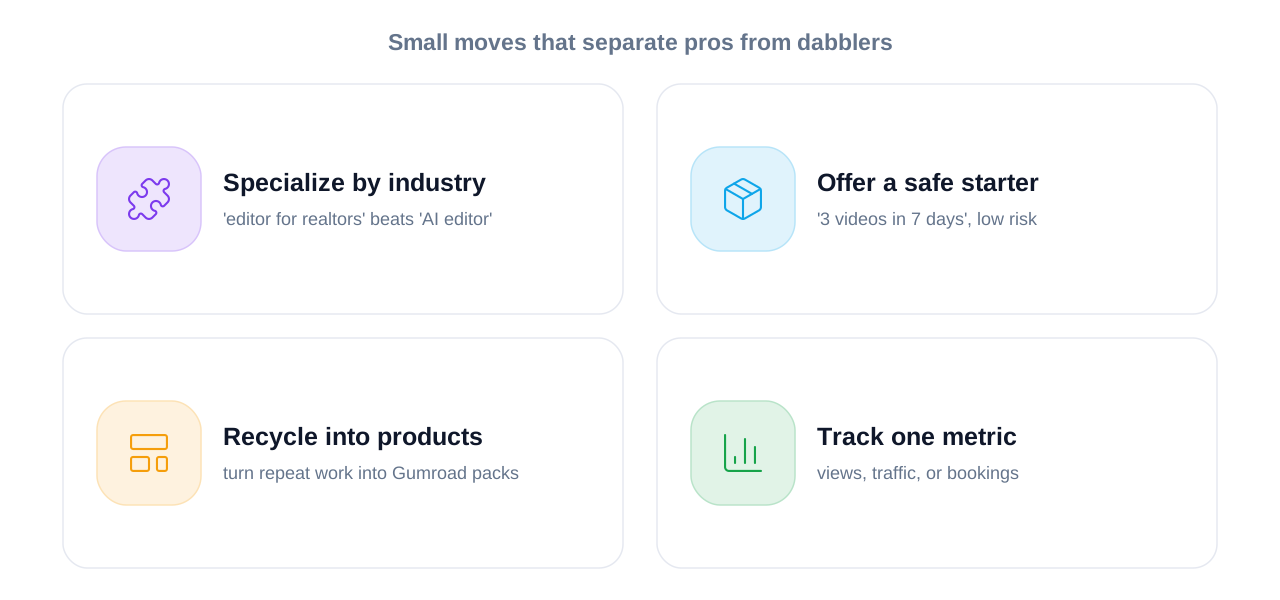
Tip 1: Specialize by industry before you specialize by tool.
Instead of calling yourself “AI video editor,” become “AI‑powered short‑form editor for real estate agents” or “AI content partner for fitness coaches.” When your examples and language focus on one group, your pitches feel like you “get” them, which makes closing clients far easier than being a generic AI service provider.
Tip 2: Offer a simple “starter package” that feels safe.
Most small businesses in the US and Canada are scared of long contracts but happy to try a low-risk package like “3 videos in 7 days” or “1 blog + 5 social captions this week.” Keep the scope tiny, price it fairly, and deliver fast; a good first experience often turns into a monthly retainer without you needing a hard sell.
Tip 3: Recycle your best workflows into products.
Every time you notice you’re repeating the same process — like a prompt pack, a content calendar format, or a thumbnail template — turn it into a product you can sell on Gumroad or similar platforms. It’s a quiet way to turn service knowledge into semi-passive income, and it doesn’t require extra creative energy.
Tip 4: Track one key metric per client.
Pick a number that matters for each project: watch time for videos, traffic for articles, leads or bookings for local services. When you can say, “our clips increased your average views by 40% over 30 days,” it becomes much easier to justify higher rates and longer contracts.
Tip 5: Use AI to improve your outreach, not just your work.
Most guides focus on using AI to deliver the service, but you can also use tools like ChatGPT to draft outreach messages, follow-ups, and proposal outlines tailored to each niche. This keeps your pipeline alive without burning all your mental energy on typing cold emails from scratch.
Tip 6: Build tiny case studies as you go.
After each successful project, ask permission to share a simple before/after story: what problem the client had, what you did (including AI), and what changed. Over time, these one‑page case studies become your biggest asset — way more convincing than generic testimonials.
Tip 7: Protect your focus from constant tool‑hopping.
There will always be a “new” AI tool trending on TikTok promising magical results. Most serious freelancers I’ve seen stick to a core stack and only test new tools when they replace an existing step in the workflow or clearly add value. This calm approach saves hours each week and keeps your service consistent for clients.
Tip 8: Surprise tip teach your process earlier than you feel ready.
Once you have even a small repeatable system, share parts of it on social media or in a low‑priced workshop. It sounds counterintuitive, but teaching positions you as an authority and often attracts better clients who trust you more because you explain how you work.
Advanced Insights What Nobody Else Tells You
Insight 1: The real moat is your “client operating system,” not your prompts.
Everyone obsesses over prompt cheatsheets, but in practice, the advantage comes from how you manage projects: how you collect input, schedule deliverables, communicate, and handle revisions. Once you systematize this, switching tools or models becomes a minor detail, and clients stay with you because you are easy to work with, not because you use a specific tool.
Insight 2: Retainers beat “AI gigs” every single time.
Platforms and marketplaces encourage short, cheap gigs because that’s how they scale, but almost every strong income story involves retainers where you get paid monthly to own an ongoing outcome (content, leads, automations). That stability is what lets you keep experimenting with higher-risk, higher-reward things like AI products or YouTube.
Insight 3: AI income is fragile if you ignore platform risk.
If all your money comes from one algorithm — YouTube, TikTok, or even a single AI tool’s affiliate program — you are one policy change away from zero. That’s why pairing an audience-dependent play (like a faceless channel) with client work or templates spread across multiple marketplaces is safer than going “all-in” on one platform.
Insight 4: Your “boring” background is your niche advantage.
If you have experience in something that feels unrelated — like nursing school, engineering projects, or part-time work in a café — that context can become a specialization where you use AI to solve problems in that exact area. Clients trust you more when you speak their language, and AI simply makes your solutions faster and cheaper to deliver.
Frequently Asked Questions 2026 Student Edition
Start by choosing one simple path such as AI‑assisted writing, social media content, or short‑form video editing, then learn 1–2 tools deeply (for example, ChatGPT plus Canva or CapCut). Create 2–3 sample projects that you can show as proof, even if they are for imaginary brands. Once you have those, write a clear offer focused on results and start sending targeted messages on freelance platforms, LinkedIn, or email. Expect the first paying client to take a few weeks of consistent outreach, not one day.
Yes, but the profit is in how you use AI, not in reselling access to the tools themselves. Many freelancers now use AI to cut the time spent on drafts, edits, or repetitive tasks, which increases their effective hourly rate. At the same time, businesses are paying for outcomes like more content, more leads, or more efficient workflows, which means there is still room if you focus on a specific niche and result.
Public examples and articles show students earning a few hundred dollars per month from basic AI‑assisted services, with some crossing $1,000+ as they move into retainers or higher‑value work. A realistic starting expectation is $100–$300/month within the first 1–3 months if you treat it seriously and send consistent outreach. Over 6–12 months, with better skills and proof, hitting $500–$1,000/month becomes possible for many, but it is not guaranteed.
The “best” tools depend on the path you choose, but a common stack for students includes ChatGPT (or similar) for writing and ideation, Canva or other AI‑enabled design tools, CapCut or Runway for video editing, and platforms like Gumroad or Etsy for selling digital products. Some advanced paths also use automation tools to connect apps and build workflows for clients. The key is to master a few tools so well that your workflow looks effortless to clients.
No, most income ideas in this guide are no-code or low-code. AI‑assisted writing, design, video editing, social content, and digital products rely more on creativity, research, and communication than on programming. Coding becomes more important if you want to build AI products or complex automations, but even there, many no‑code platforms help you get started before you touch a line of code.
For some students, yes, especially when they lock in 2-4 stable clients or build digital products that sell steadily. Articles about AI side hustles show monthly ranges from a few hundred dollars up to $1,000+ when people stick with one path and improve it. That said, income can be irregular at first, so it is smarter to treat AI income as a flexible part-time stream until you see consistent results over several months.
The safest starting points are services where quality matters more than technical depth: AI‑assisted freelance writing, social media content creation, and simple template or notion pack sales. These require only basic tools and can be improved quickly with feedback. As you gain confidence, you can move into higher‑value paths like AI automation setups, where there are fewer competitors but higher expectations.
Fastest‑moving paths like AI‑assisted freelancing can bring your first $50–$200 within 4–8 weeks if you do daily outreach and improve your offer. Slower, asset-based paths like faceless YouTube channels or digital product shops may take 3–6 months before you see meaningful income, because they depend on audience growth or search traffic. Your timeline depends more on focused action than on the specific tool you choose.
Using AI tools for client work or content is generally legal as long as you follow each platform’s terms of service and respect copyright rules. You should be transparent with clients about your process, especially if you use AI to generate parts of the work, and you must avoid generating harmful or misleading content. For anything related to finance, health, or law, treat AI as an assistant and always verify information with trusted sources; This guide is not a substitute for professional advice.
Quick Summary Take This Away
If you scrolled straight here, here is the core idea: you can absolutely use AI to make money online in 2026 as a student, but only if you treat it as a tool that amplifies your skills, not a replacement for effort. The most reliable opportunities sit in the boring middle — AI‑assisted writing, short‑form video editing, social content, simple automations, and digital products — where businesses already spend money and you can clearly prove value.
You start by choosing one lane, learning 2-3 tools deeply, and creating a handful of proof projects that show real quality. Then you package what you do in outcome language and push that offer in front of real people for at least a month, tracking one key metric per client so your work becomes more valuable over time. From there, you can stack income streams: fast cash from services plus slower, compounding income from templates or content channels.
If you remember nothing else, remember this: pick one AI‑powered skill, give it 60 serious days, and let actual client feedback shape your next move instead of chasing every new tool trend. The next step is simple: choose the single path from this list that feels most natural to you right now, and commit to building your first three proof pieces this week.
Conclusion
Using AI to make money online in 2026 is less about secret prompts and more about behaving like a young professional who happens to have very powerful tools. When you combine even basic skills in writing, video, design, or organization with focused use of AI, you unlock income streams that fit around classes, part-time jobs, and your life.
The three big ideas are simple: niche down by problem or industry, sell outcomes instead of “AI work,” and slowly shift from one-off gigs to retainers and digital assets as you gain proof. You will still face rejection, dry weeks, and tool changes, but those are normal parts of the process, not signs that it “doesn’t work.”
If you are willing to stick with one lane long enough to get good, AI becomes the thing that lets you earn earlier and smarter than most people your age. Pick your lane today, schedule your first practice projects, and give yourself permission to be a beginner who is building something real.