
Drovenio AI Review: Are We Automating Work or Just Reading About It?
You know that moment when you Google an “AI automation platform” and realize half of them are just very confident landing pages? Drovenio AI sits right in that strange space where it’s both about automation and not exactly the kind of tool you think it is.
This site exists to help you survive AI, tech, and digital productivity without losing your brain cells in buzzwords. So let’s be clear: some people talk about Drovenio like it’s a magic “business automation tool,” but a lot of what it actually does is closer to an AI-powered knowledge and guidance platform that teaches you how to use tools, structure automation, and make smarter decisions.
If you’re an 18–25-year-old AI/tech student trying to understand what’s real in automation, Drovenio is interesting because it sits at the intersection of two things: actual AI-powered task support (content, analysis, productivity workflows) and editorial guidance about automation, RPA, and digital transformation. It’s not Zapier. It’s not a full-blown RPA platform. It’s something weirder and possibly more useful if you’re early in your automation journey.
THE THING NOBODY ACTUALLY SAYS OUT LOUD
Let’s say it plainly: most people calling Drovenio “the business automation tool” haven’t read past the homepage. Drovenio, at its core, is positioned much more as an AI-powered knowledge and learning platform about AI, automation, and digital transformation than a single app where you drag blocks and deploy bots.
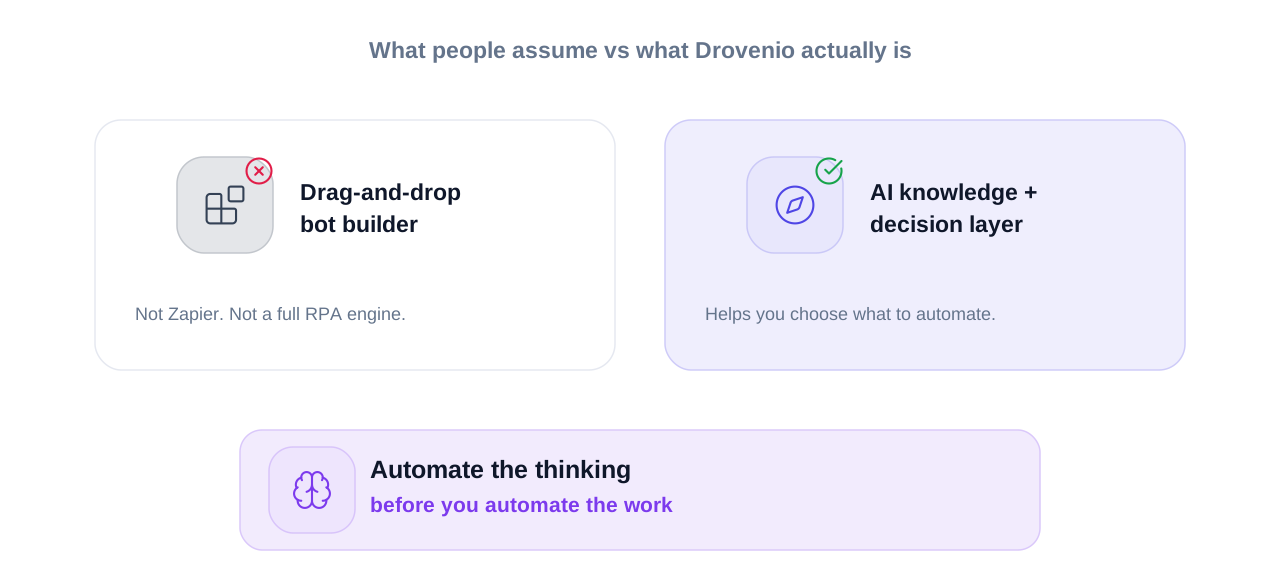
Reviews repeatedly describe it as a place to understand AI tools, automation options, risk, and strategy, with a mix of educational content, guides, and AI-assisted workflows. Think of it less as “one giant automation robot,” more as a hub that helps business owners and learners understand what to automate, which tools to pick, and how to think before they pay for something expensive they’ll barely use. Which, if you’ve seen how many teams sign up for tools and then ghost them, makes depressing sense.
Some sources make it clear: Droven.io is “an AI-powered editorial and knowledge platform built around AI, automation, cloud, cybersecurity, and emerging tech,” not a classic SaaS workflow engine. At the same time, you’ll find articles and promos referring to “Drovenio AI tools” that help with content creation, SEO drafting, data analysis, marketing workflows, and productivity tasks. Both can be true: the “product” here is part AI helper, part structured education.
The truth nobody says out loud is this: Drovenio is trying to automate the thinking before you automate the work. In a world where people jump straight into buying automation tools they don’t understand, the platform leans into clarity, context, and decision support. That doesn’t sound as flashy as “end-to-end automation,” so marketing language around it drifts into vague “AI tools” territory.
For students, there’s a weird upside here. Instead of yet another AI toy where you type a prompt and get copy-pasta output, Drovenio leans into structured content around AI strategy, use cases, and implementation journeys — how AI fits into business, not just how to write a nicer email. It maps what companies should automate, why, and in what order. That’s closer to how actual roles in AI consulting, product, and operations think.
If you’ve ever binge-watched a “how to build a Notion system” video and realized the real value isn’t the template but the thinking behind it, you’ll recognize the pattern. Drovenio tries to do that for AI and automation: less “push this button,” more “here’s how to think about your workflows, tools, and risk so you don’t burn money chasing the wrong problem.”
For the record: yes, there are Drovenio AI tools and features that help with content, automation planning, and business workflows. But if you go in expecting a drag-and-drop automation platform like Zapier or Make, you’re going to be confused. It’s closer to an AI-flavored operating system for understanding and designing your automation stack than the stack itself.
HOW THIS ACTUALLY WORKS THE REAL MECHANICS
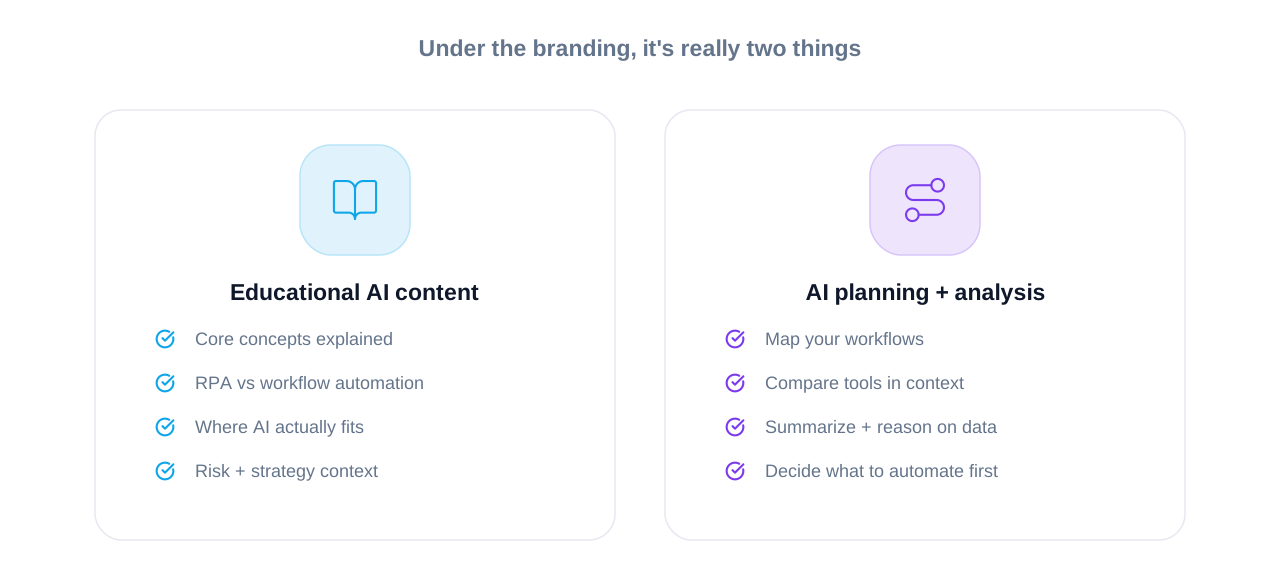
Strip away the branding and Drovenio’s mechanics fall into two big buckets: educational AI content plus AI-enhanced support for planning and testing automation. Instead of giving you “one bot to automate everything,” it focuses on mapping your options, explaining tools, and helping you design sane workflows.
Platforms like Droven.io organize content around phases of the AI journey: understanding core concepts, comparing tools, figuring out risk, and planning implementation. That means you’re not just thrown into a prompt box. You’re guided through “what is RPA vs workflow automation,” “where AI actually fits,” and “how do I structure decision-making without selling my soul to one vendor.” The AI layer is there to help you analyze, summarize, and reason through business scenarios, not just spit out marketing copy.
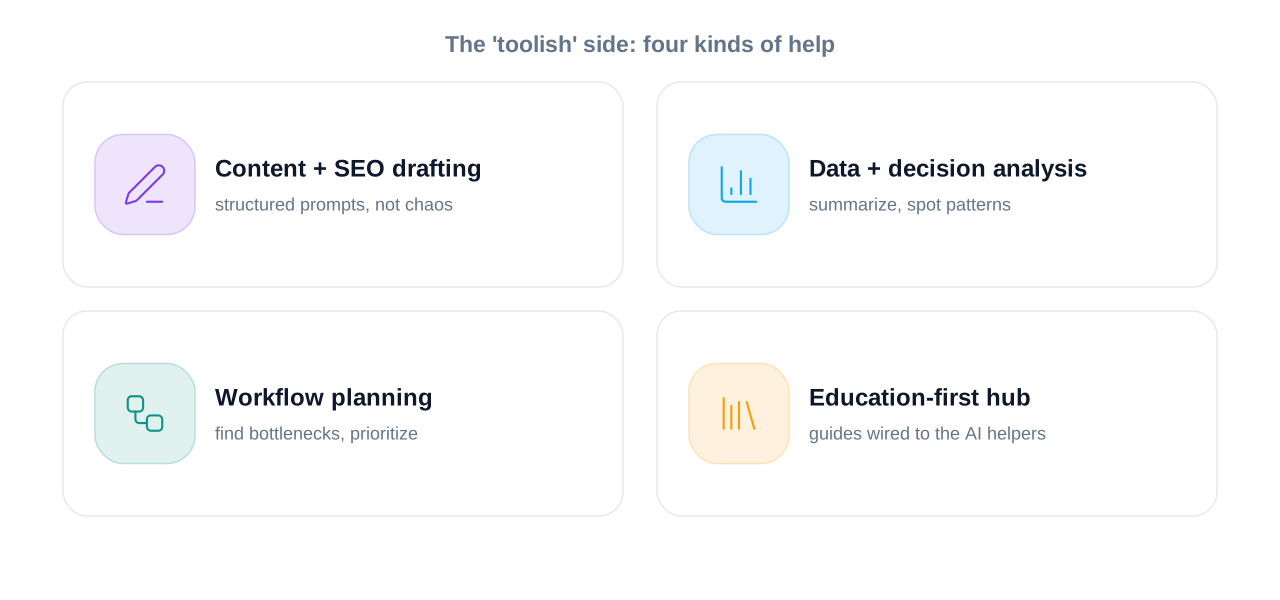
On the more “toolish” side, different writeups of Drovenio AI describe features like:
- Content and SEO drafting support: Helping users create articles, posts, and marketing copy with structured prompts and best practices, instead of total free-form chaos. Opinion: this is helpful if you like rails; annoying if you want total creative control.
- Data and decision analysis helpers: AI used to summarize data, highlight patterns, or support decision-making for digital transformation and automation roadmaps. Opinion: Closer to “AI analyst buddy” than “full analytics platform.”
- Workflow and automation planning frameworks: Guides on how to break down business processes, identify bottlenecks, and decide which tasks should be automated first. Opinion: honestly, this is where most businesses fail, so this focus isn’t as boring as it sounds.
- Education-first layout: Articles, guides, and structured resources about AI, automation, cloud, and cybersecurity are tightly integrated with the AI helpers. Opinion: it feels more like a “learning and decision hub” than a classic SaaS dashboard.
The niche angle most generic “AI tools list” posts miss is this: Drovenio is not trying to replace your stack; it’s trying to shape how you build your stack. It’s an editorial and decision-support layer for AI adoption, not just another “write 10 social posts in 3 seconds” button.
If you’re used to tools that scream about generative content and nothing else, this quieter focus on knowledge and strategy looks underwhelming. But talk to anyone who has actually tried to roll out AI and automation at scale and they’ll tell you: the biggest risks aren’t prompt quality, they’re misaligned projects, unclear workflows, and random tool choices that don’t connect.
So practically, how does this play out for you as a student or junior builder? You’d likely use Drovenio to:
- Understand categories: Learn the difference between AI writing tools, RPA platforms, analytics tools, and “AI features” slapped onto random SaaS.
- Research tools before committing: Compare automation tools, read contextual explanations, and get AI-assisted breakdowns of pros, cons, and fit.
- Design smarter test projects: Use its frameworks to map a process (say, onboarding or content production) and decide where AI fits, instead of just throwing GPT prompts at everything.
It’s not the “do everything for you” robot. It’s the slightly nerdy friend with a whiteboard who stops you from buying random subscriptions you don’t need.
COMPARISON WHAT’S ACTUALLY DIFFERENT BETWEEN YOUR OPTIONS
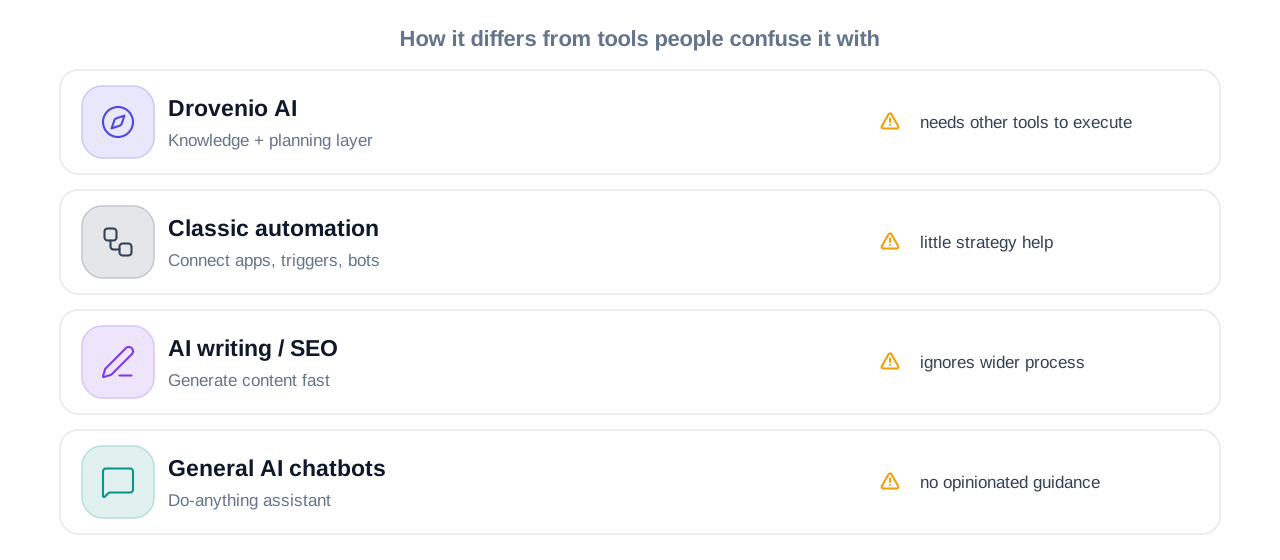
Here’s how Drovenio AI stacks up against the types of tools people confuse it with.
| Option | What it actually does | Who it’s for | The catch |
| Drovenio AI / Droven.io | AI-powered knowledge + planning platform for AI, automation, and workflows; some helper tools for content and analysis | Students, founders, operators who want to understand and plan automation, not just push buttons | Not a full RPA/workflow engine; you still need other tools to execute |
| Classic automation tools | Connect apps and automate actions (triggers, actions, bots) across systems | Teams with defined processes who know what they want to automate | Little help with strategy; easy to build fragile or pointless flows |
| Pure AI writing/SEO tools | Generate content, copy, and SEO drafts quickly | Marketers, creators, founders need volume content | Minimal focus on process, strategy, or wider business automation |
| General-purpose AI chatbots | Do-anything assistants with broad prompts and flexible outputs | Anyone, including students experimenting with AI | No opinionated guidance about automation strategy or stack choices |
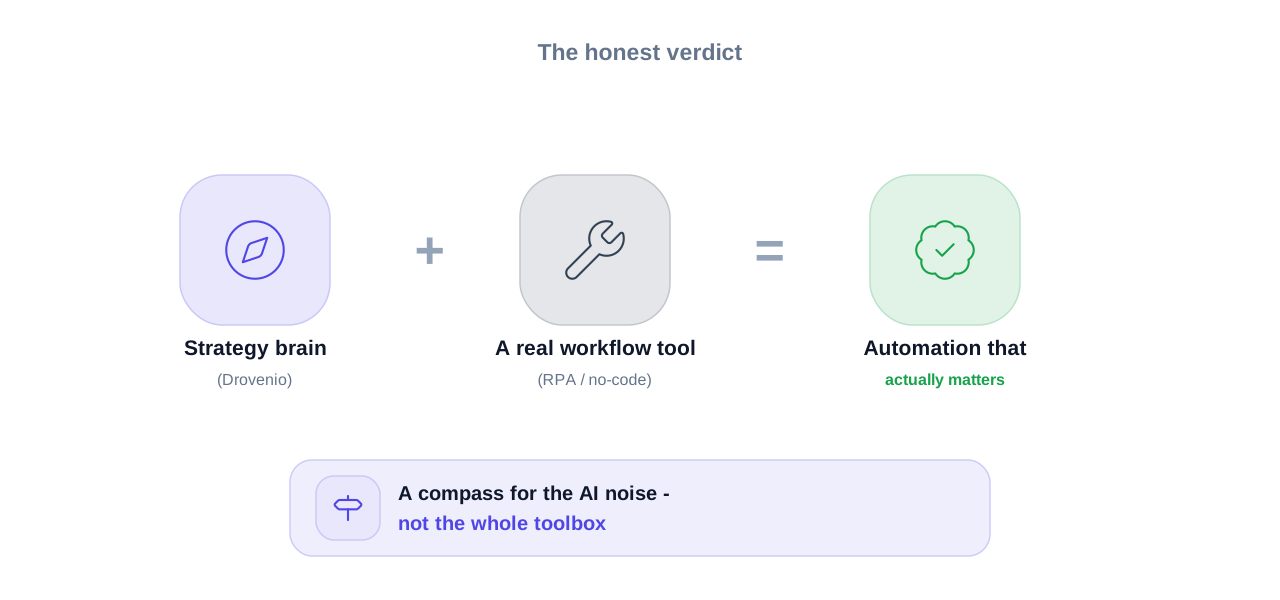
If you want an actual workflow engine, you pair Drovenio’s thinking and guidance with something like RPA or no-code automation tools. If you want to stop being lost in the AI chaos and start making informed choices about tools and automations, Drovenio alone can be worth your time.
WHAT ACTUALLY HAPPENS WHEN YOU TRY THIS
When you actually use something like Drovenio as an “automation tool,” you realize pretty fast that it doesn’t behave like the usual click-a-few-zaps-and-we’re-done kind of platform. Instead of throwing you into connectors and triggers, it pulls you back a step and asks: what are you even trying to fix?
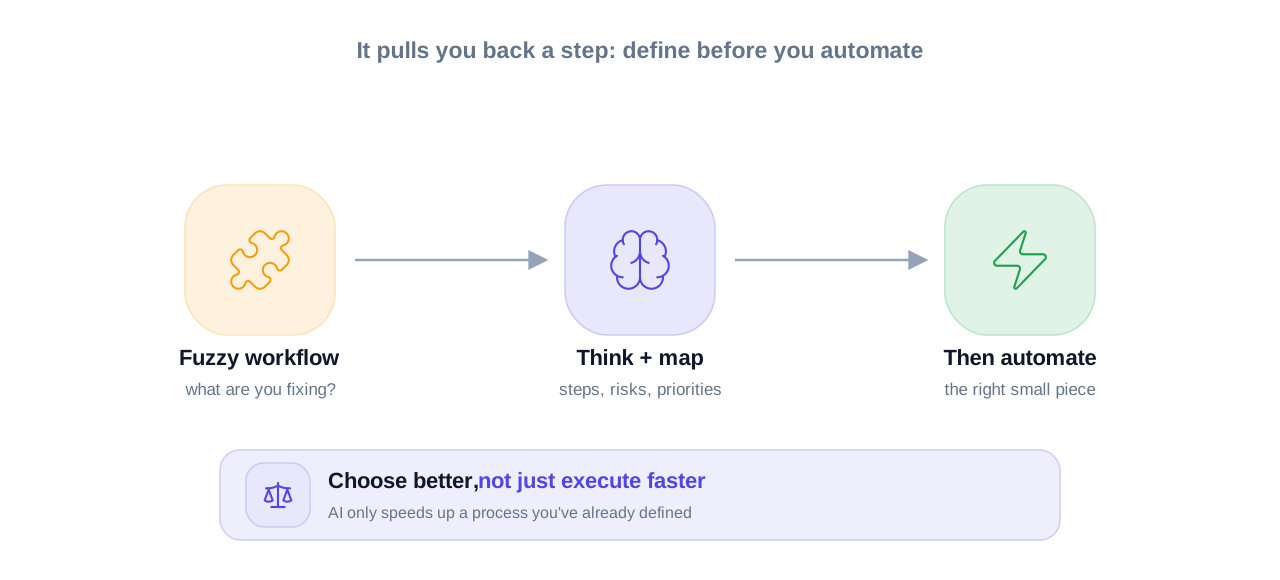
For small business owners and students testing it, the pattern tends to look like this: you land on content explaining AI, automation, and digital transformation journeys, then you start using AI-assisted guidance to map workflows or explore tools in context. It’s less “I automated three tasks in 10 minutes,” more “I finally understand why my last attempt at automation was chaos.”
One thing that surprises people: Drovenio’s focus on choice intelligence . Several reviews call it a “decision intelligence resource” for AI and automation — meaning it’s designed to help you choose better, not just execute faster. When you actually try it, that shows up as frameworks, comparisons, and explanations instead of only templates or task lists. If you’re impatient, that feels slow. If you’ve already blown time on the wrong tools once, it feels like a relief.
Another pattern most surface-level articles miss: this approach is especially useful if your workflows are still fuzzy. Practitioners often point out that AI tools don’t fix unclear workflows; they just speed up whatever you’ve already defined, and that’s risky when your process is a mess. Drovenio leans into that problem by forcing you to actually think through steps, use cases, and priorities before trying to automate everything.
From a student perspective, using Drovenio-type content while building a project has an interesting side effect. You stop treating automation like magic and start treating it like design: which tasks are bottlenecks, which should be automated, where humans must stay in the loop, and how to avoid “shadow AI” chaos. It’s not as satisfying as watching a flashy demo, but it’s a lot closer to how real automation projects succeed or fail.
What nobody warns you about here: you might come in looking for “a tool that fixes my business,” and leave with a to-do list that’s mostly about process cleanup, documentation, and choosing simpler use cases. That can feel underwhelming until you realize that’s exactly what people who’ve actually shipped automation systems tell you to do.
THE ADVICE EVERYONE GIVES VS WHAT ACTUALLY WORKS
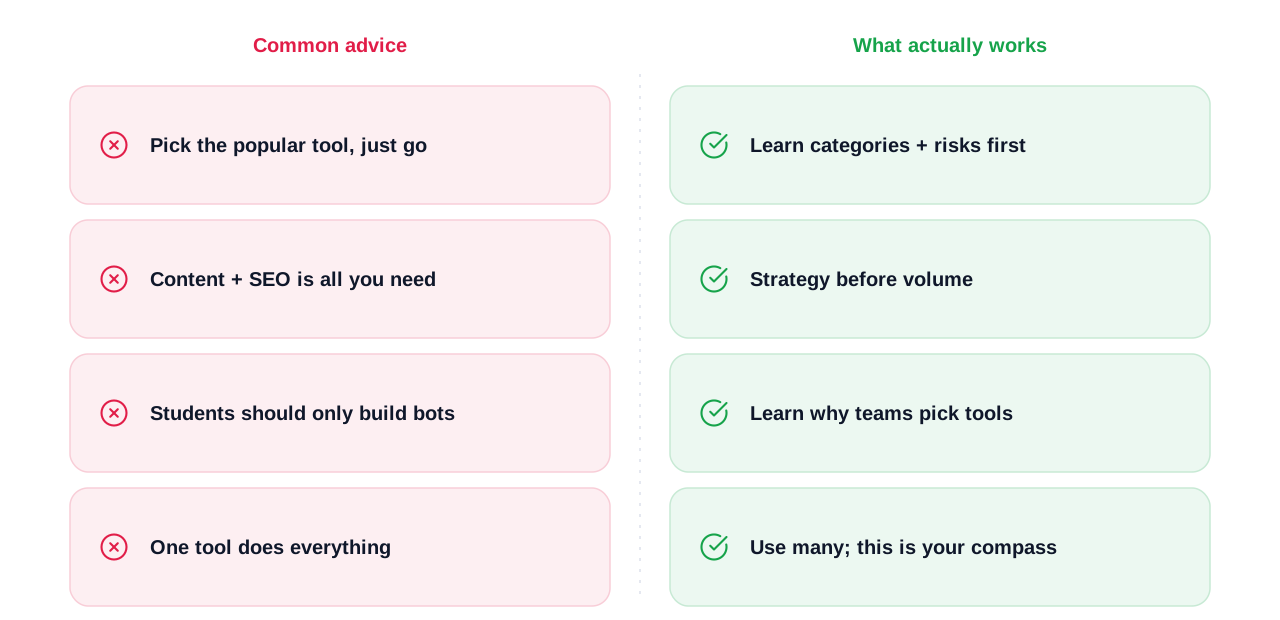
- “Just pick the most popular AI automation tool and go.”
This is the default internet advice: sign up, connect a few apps, dump in prompts, and you’re on your way to “passive income.” It’s also how you end up with duct-tape automations that nobody understands or trusts. Generic tools won’t tell you what to automate or why. The more realistic route — and where Drovenio tries to live — is to start with education and mapping: learn categories, understand risks, and decide which use cases are actually worth automating before touching triggers. - “Content and SEO automation is all you need.”
There’s a lot of hype around AI content tools: posts, blogs, ad copy, SEO pages — pushed out in bulk. But content without strategy or workflow just bloats your site and confuses users. Reviews of Drovenio AI tools talk about automation for content creation and SEO, but framed within a larger journey of understanding where content fits in business growth and digital transformation. The better mindset is: use AI to speed up content and communication, but only after you’re clear on audience, funnel, and what “success” looks like. - “Students should only build bots, not study strategy.”
It’s tempting: ignore the “boring” stuff and jump straight into building scripts and automations. But the jobs that last aren’t just about wiring APIs, they’re about understanding how AI and automation fit into real businesses. Drovenio’s heavy focus on knowledge and decision support is actually aligned with that reality — it teaches patterns, not just point solutions. If you’re thinking long term, learning why teams choose or reject certain automations is more valuable than another one-off bot. - “One tool should do everything.”
You’ll see tools marketed as end-to-end platforms that promise to handle every part of your digital life. That rarely holds up. Drovenio’s ecosystem of knowledge, tooling, and decision support is openly built to sit alongside your other tools — not replace your CRM, RPA, or workflow engines. The realistic alternative is to accept that you’ll use multiple tools and treat Drovenio-like platforms as your compass rather than your entire toolbox.
THE PRACTICAL PART WHAT TO ACTUALLY DO
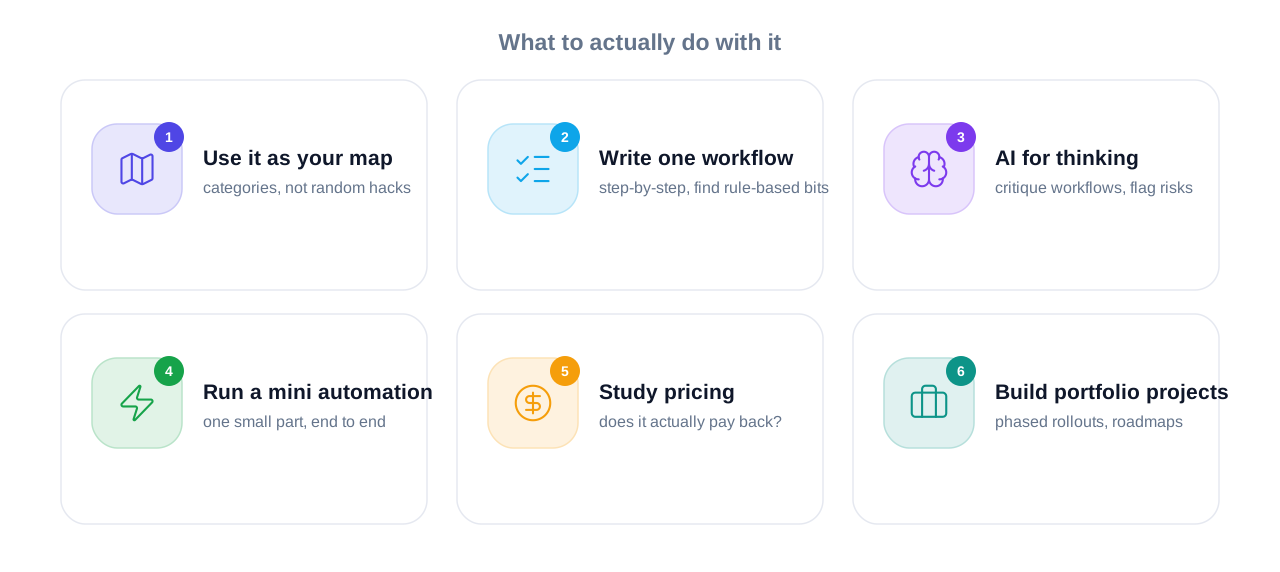
- Use Drovenio as your AI and automation “map,” not your only tool.
If you’re a student or early-stage founder, start by using Drovenio’s content and guides to understand categories: AI assistants, RPA, workflow tools, analytics, and security. Build a one-page map of tools you might need for one process, like onboarding or content production. This forces you to think in systems instead of random one-off hacks. - Pick one real workflow and write it out step by step.
Take something boring but real: how a lead goes from first contact to signed deal, or how a blog post goes from idea to publication. Use Drovenio-style frameworks to break this into small steps: gather info, draft, review, approve, publish, follow up. Then mark which steps are repetitive and rule-based; those are your best automation targets. - Use AI features for thinking, not just typing.
Drovenio AI tools and similar platforms can help you summarize long pages, compare options, or analyze pros and cons for tool choices and automation plans. Don’t just make them write content; make them critique your workflow, suggest missing steps, or highlight risks like data privacy and failure points. That’s where they start feeling like actual co-pilots, not just fancy keyboards. - Run one “mini automation” experiment end to end.
Once you’ve mapped a process and used Drovenio-like content to understand your options, pick one small part to automate with a dedicated tool — something like automated follow-up emails, simple report generation, or basic content repurposing. Document what worked, what broke, and what was annoying. That feedback loop is more valuable than another theory article. - Study pricing and value like a grown-up.
If you’re anywhere near business or product roles, pay attention to how AI tools price themselves — usage-based, seat-based, add-on pricing, or outcome-based models. Use Drovenio-style guides on decision-making and digital transformation to evaluate whether something actually pays back for a small business, or just looks cool on a tech stack screenshot. - Treat Drovenio as a learning hub for your portfolio projects.
If you’re building a portfolio as a student, use ideas and patterns from Drovenio’s content (like “choice intelligence” and staged AI adoption) to design your own demo projects — eg, a roadmap for automating a local café, or a phased AI rollout for a student organization. That signals you think beyond pure code.
QUESTIONS PEOPLE ACTUALLY ASK
Drovenio AI sits closer to an AI-powered knowledge and decision platform than a classic workflow automation engine. It helps you understand AI, automation, and digital transformation, and offers AI tools for content, analysis, and planning. You still pair it with other tools to execute heavy-duty automation like RPA or complex cross-app workflows.
It can help you learn AI and automation concepts, compare tools, think through risks, and plan which workflows to automate first. Some Drovenio AI tools assist with content creation, SEO drafting, data analysis, and productivity tasks. In practice, it’s best used as a planning and learning layer on top of the tools that actually run your automations.
Yes, as a thinking and planning companion for owners and teams who want to adopt AI and automation without burning money or trust. Reviews describe it as useful for small businesses trying to improve workflows, decision-making, and digital transformation using structured guidance and AI-powered support. It won’t replace your CRM or accounting software, but it can help you choose and use them more intelligently.
Most AI writing tools focus on churning out text as fast as possible. Drovenio connects writing and content to a broader system: business strategy, automation, and digital productivity. It blends educational content with AI-assisted drafting so you’re not just generating copy, you’re using it within a thought-out workflow. That’s a better fit if you care about why you’re writing something, not just how quickly.
Yes. For students, Drovenio is basically a rich source of real-world context about AI, automation, and digital transformation. You can use it to study how businesses think about AI adoption, what problems they try to solve first, and how tools are evaluated. That context makes your projects and interviews sound a lot more grounded than “I built a random bot because it was cool.”
No. It’s not built to be a full drag-and-drop automation or robotics process automation platform. Instead, it helps you understand when and how to use tools like that, and supports planning, content, and decisions around automation. You still need separate platforms to connect apps and execute transactional workflows at scale.
Drovenio’s content and tooling are aimed at helping businesses and professionals think clearly about AI and automation as part of a broader digital transformation journey. It covers foundational concepts, emerging tech areas, strategy, risk, and practical implementation paths. That makes it more of a guide and co-pilot for transformation, not just a single product you “turn on” and forget.
If you only care about model architecture and never want to touch product or business decisions, it’s optional. But if you see yourself in roles like AI engineer in a company, consultant, or product-minded dev, the strategy, use case framing, and decision-support aspect of Drovenio is valuable. It’ll help you connect the dots between “model works” and “business actually benefits.”
SO WHERE DOES THIS LEAVE YOU?
So no, Drovenio AI is not the magical “one-stop automation tool” some headlines suggest. It’s closer to an AI-flavored navigation system for the messy world of AI tools, automation options, and digital transformation decisions. If you want a drag-and-drop bot builder, you’ll be disappointed. If you want to stop feeling lost in AI noise, you’ll probably be relieved.
For AI tech students and early professionals, this matters more than it seems. Tools come and go; the thinking pattern — how to pick tools, scope automations, understand risk — sticks. Drovenio sits exactly there, in the boring, important middle between hype and implementation.
If you do one thing today, make it this: pick a single business workflow you care about and try to describe how Drovenio-style guidance could help you map, prioritize, and then automate it with the right stack. That exercise alone will tell you whether this is a platform you actually need or just another tab in your already crowded browser.
It won’t be clean, it won’t magically fix chaos, and it definitely won’t write your entire business plan for you. But if it stops you from buying the wrong tools and keeps you focused on automations that actually matter, that’s a smarter kind of “automation” than any one-click bot.
You made it to the end of a long review about a platform that doesn’t promise to do everything for you, which tells me two things: you care about this stuff more than most people, and you’ve already figured out that picking tools is half the job. Drovenio AI won’t run your business, but it might help you think about it in a way that makes your future automations less chaotic and more useful.
If you end up pairing it with a real workflow tool and using it as your AI strategy brain, that’s probably the version of “business automation” you were actually waiting for — just no one framed it that honestly before.



[…] core question is simple: if you put your AI model on the device (edge) instead of in some distant data center (cloud), do you actually get faster […]